

Investment opportunities in Animal Health
12 May 2025
2 min read
Investment Thesis
India’s rising role in the global animal health market
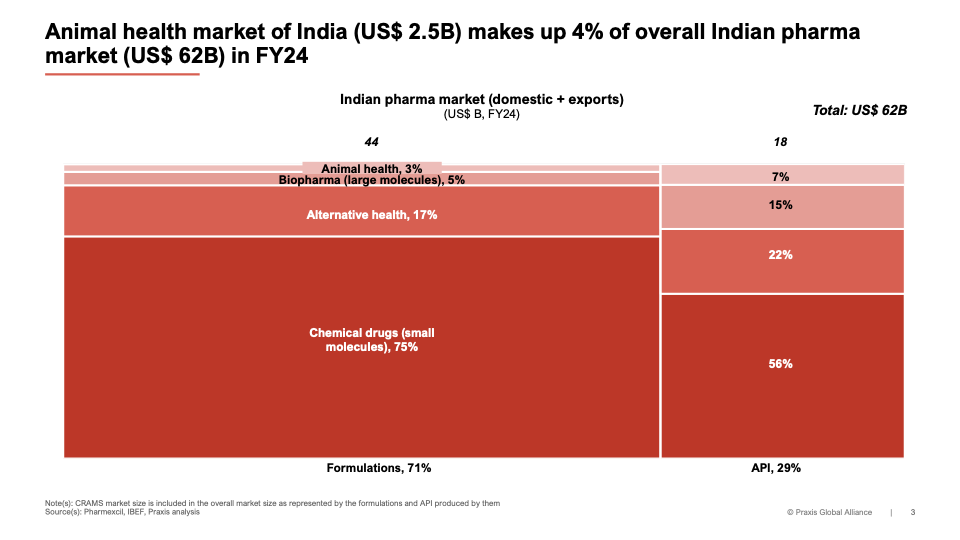
- India is emerging as a critical hub in the global animal health ecosystem, backed by a strong domestic manufacturing base and growing export focus
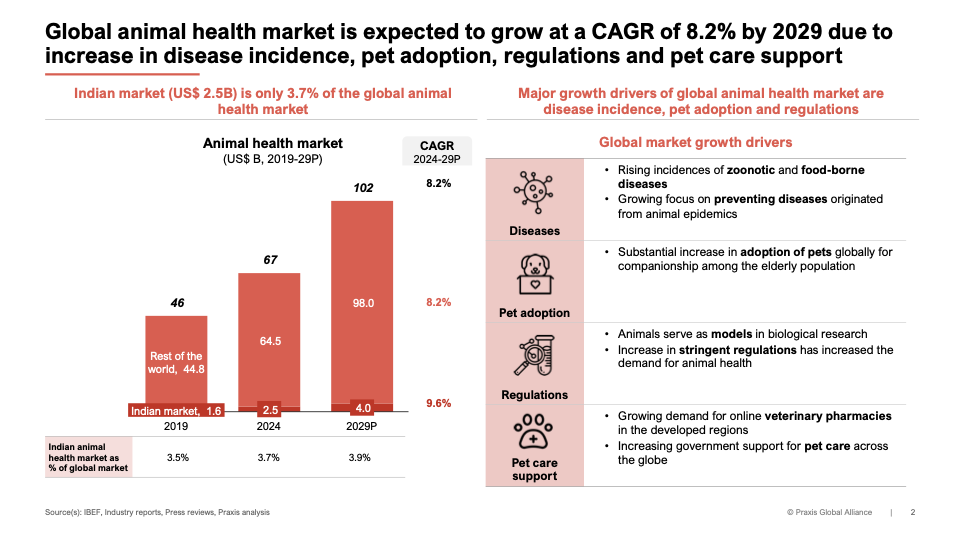
- The Indian animal health market is projected to grow from US$ 2.5B to US$ 4B by FY29, clocking a 9.6% CAGR, outpacing the global rate of 8.2% CAGR
- The market is driven by increasing livestock populations, growing pet ownership, and rising awareness of animal disease prevention
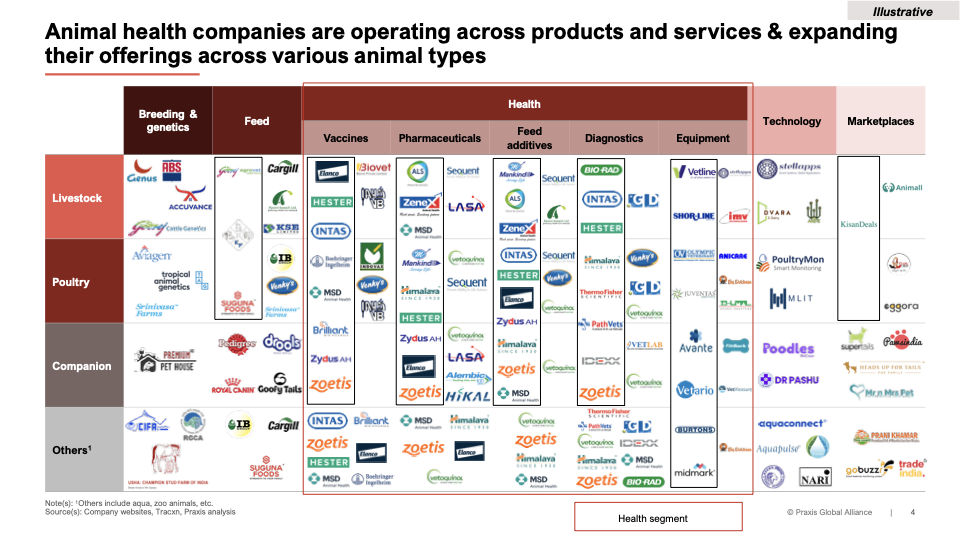
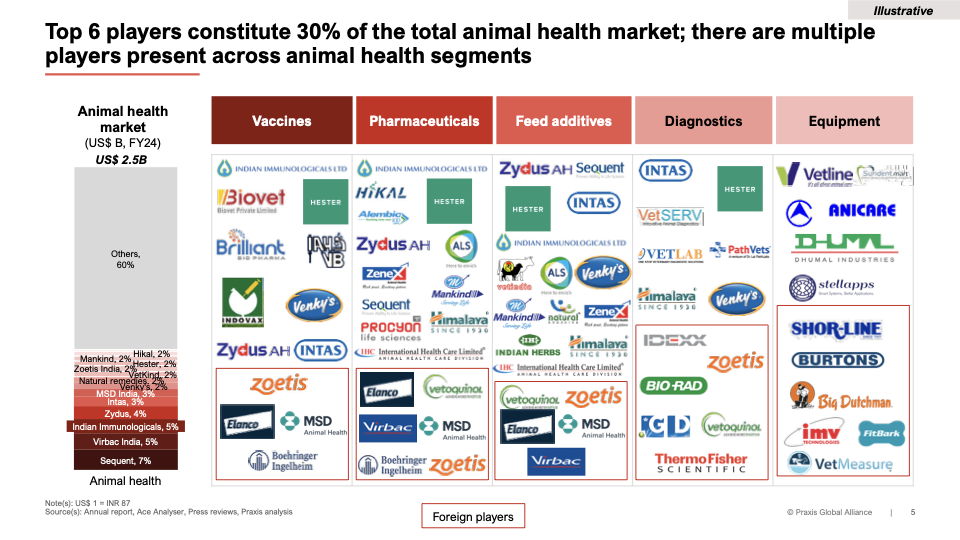
- Major domestic players include Venky’s, Indian Immunologicals, and Hester Biosciences, alongside multinational companies expanding their footprint in India
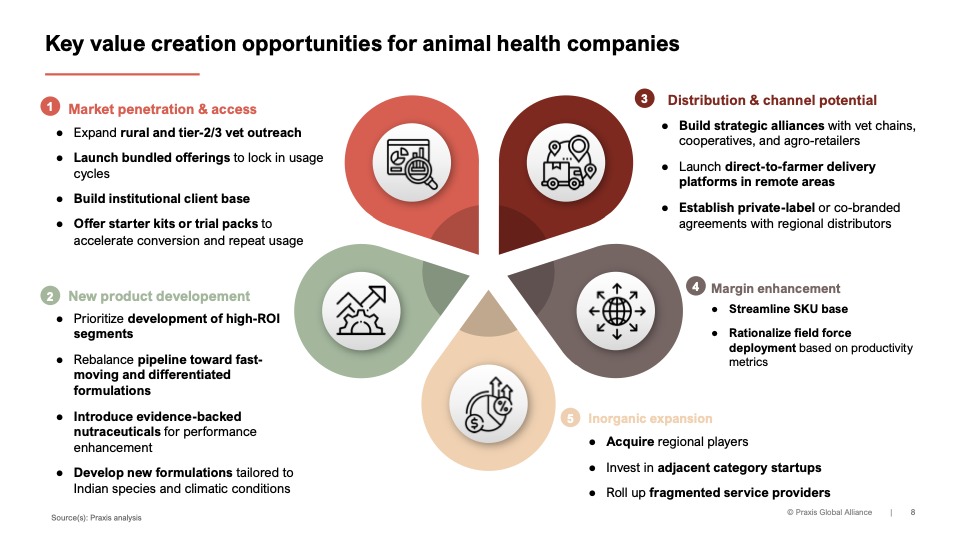
- Incumbent players are doubling down on next-gen vaccine development, with focus areas including: thermostable and multivalent formulations, recombinant and vector-based vaccines for FMD, PPR, and Brucellosis
- Multinationals (e.g., Zoetis, Elanco) are deepening their India presence via partnerships and tech transfer models
- Startups are targeting white spaces in: pet health and tele-vet platforms (e.g., Wiggles, Supertails), precision livestock monitoring using IoT and AI, and supply chains for last-mile reach
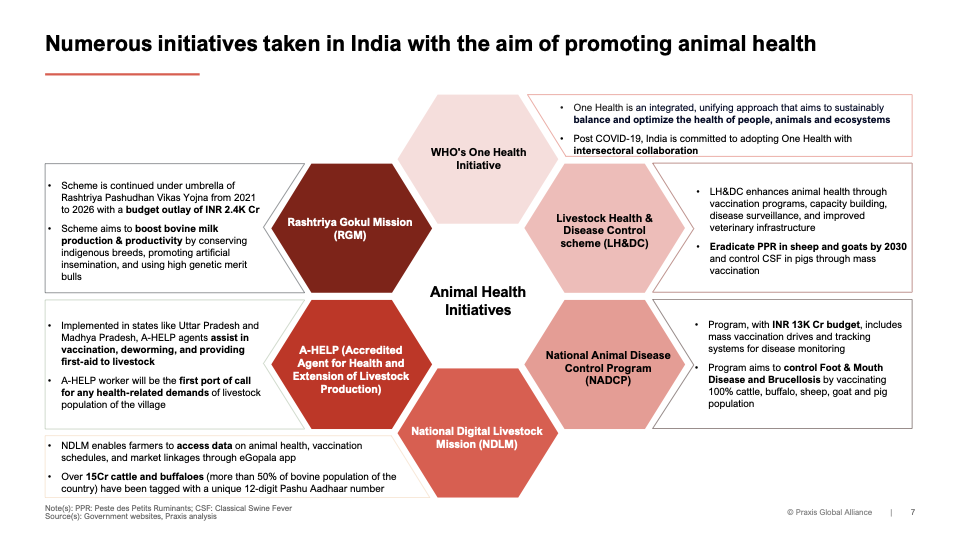
- Policy support remains a key enabler, with national programs like the Rashtriya Gokul Mission (RGM) and Livestock Health & Disease Control (LH&DC) scheme aiming to improve productivity and disease management
- India is also aligned with global health priorities through initiatives such as WHO’s One Health framework, driving integrated livestock-human-environment health models
- Programs like NADCP are structurally expanding the market for vaccines, diagnostics, and surveillance infrastructure, offering long-term visibility for manufacturers and service providers
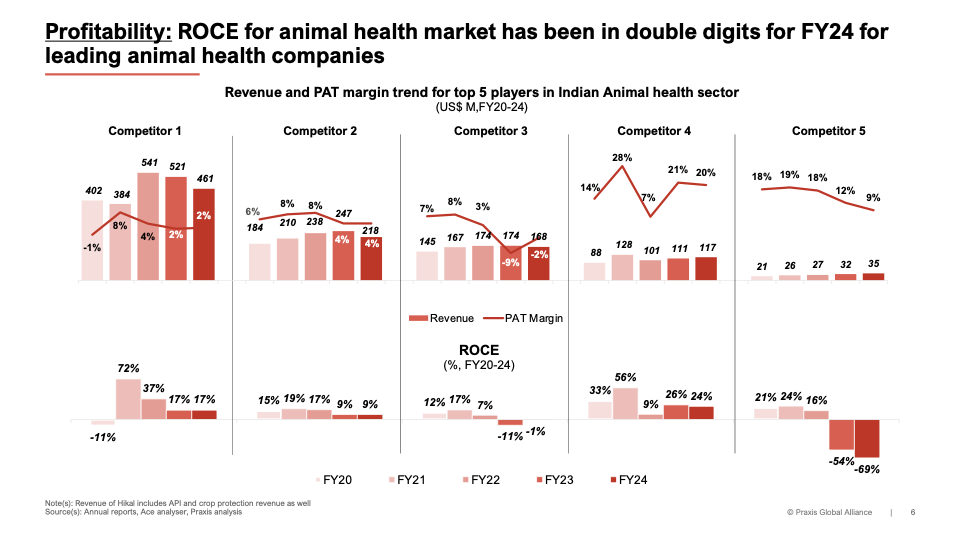
- Industry leaders reported double-digit ROCEs and healthy EBITDA margins in FY24, highlighting the sector's capital efficiency
- Investor momentum is rising, with US$ 506M deployed between CY21–CY24 across vaccines, diagnostics, and pharma-led models, reflecting growing institutional confidence