


Genomic innovations shaping emerging markets
14 May 2025
Welcome
to this edition of our newsletter, where we explore how genomics is
revolutionizing healthcare in emerging markets. As advancements in genomics
reshape medicine globally, emerging nations stand on the cusp of a healthcare
transformation. Precision medicine, early disease detection, and personalized
treatments are becoming increasingly accessible. In this edition, we examine
the potential, progress, and challenges of genomics adoption in these regions -
and how they can leverage it to improve patient outcomes.
Applications of genomics
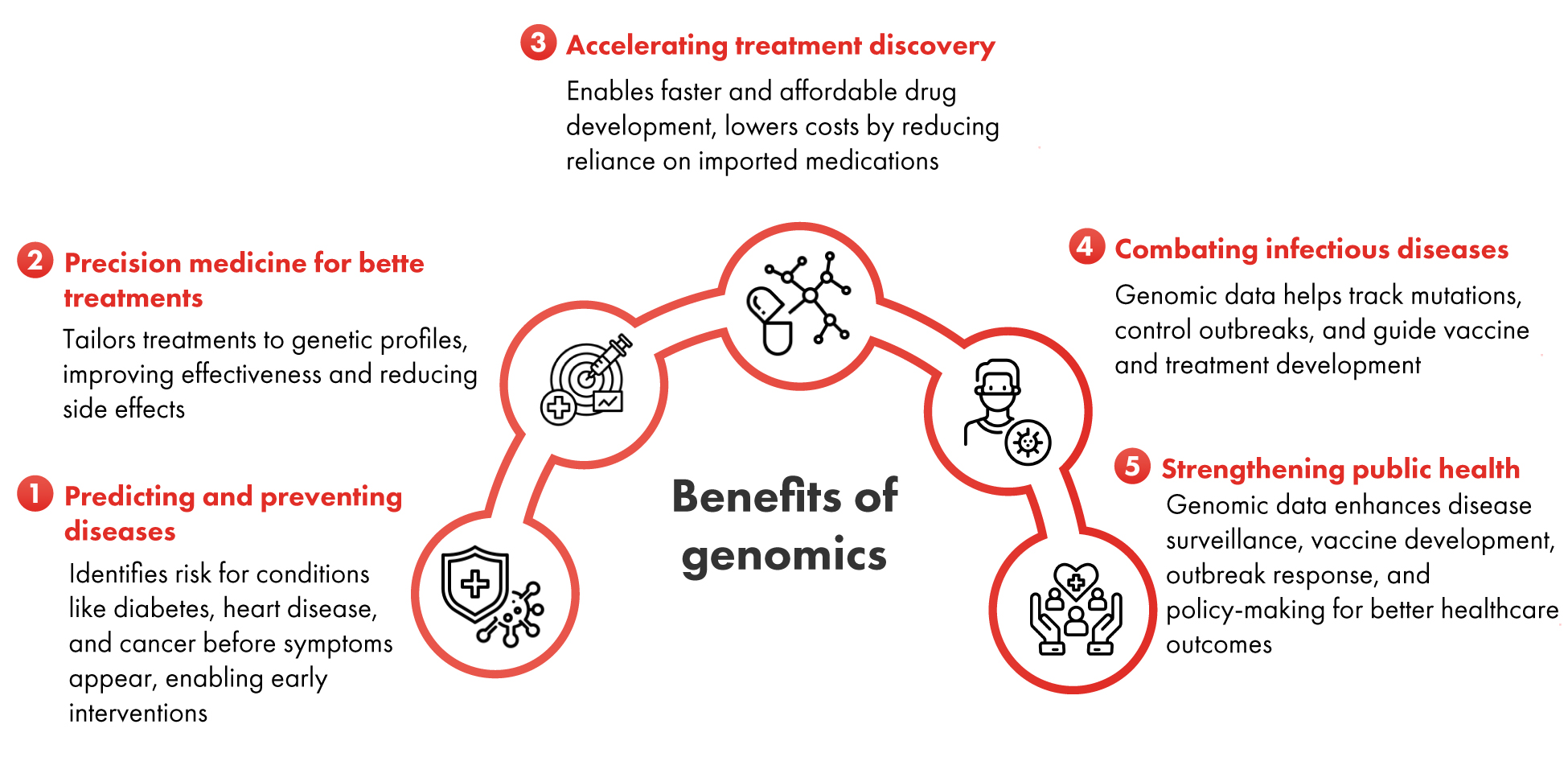
Exhibit 1: Benefits
of genomics
Market opportunity
The
genomics market across emerging economies is witnessing robust growth,
propelled by advancements in healthcare infrastructure, increased investment in
R&D, and a rising demand for personalized medicine. Emerging countries such
as Egypt, South Africa, Brazil, India and
China are at the forefront of this transformation.
Exhibit 2: Genomics market size across select emerging
economies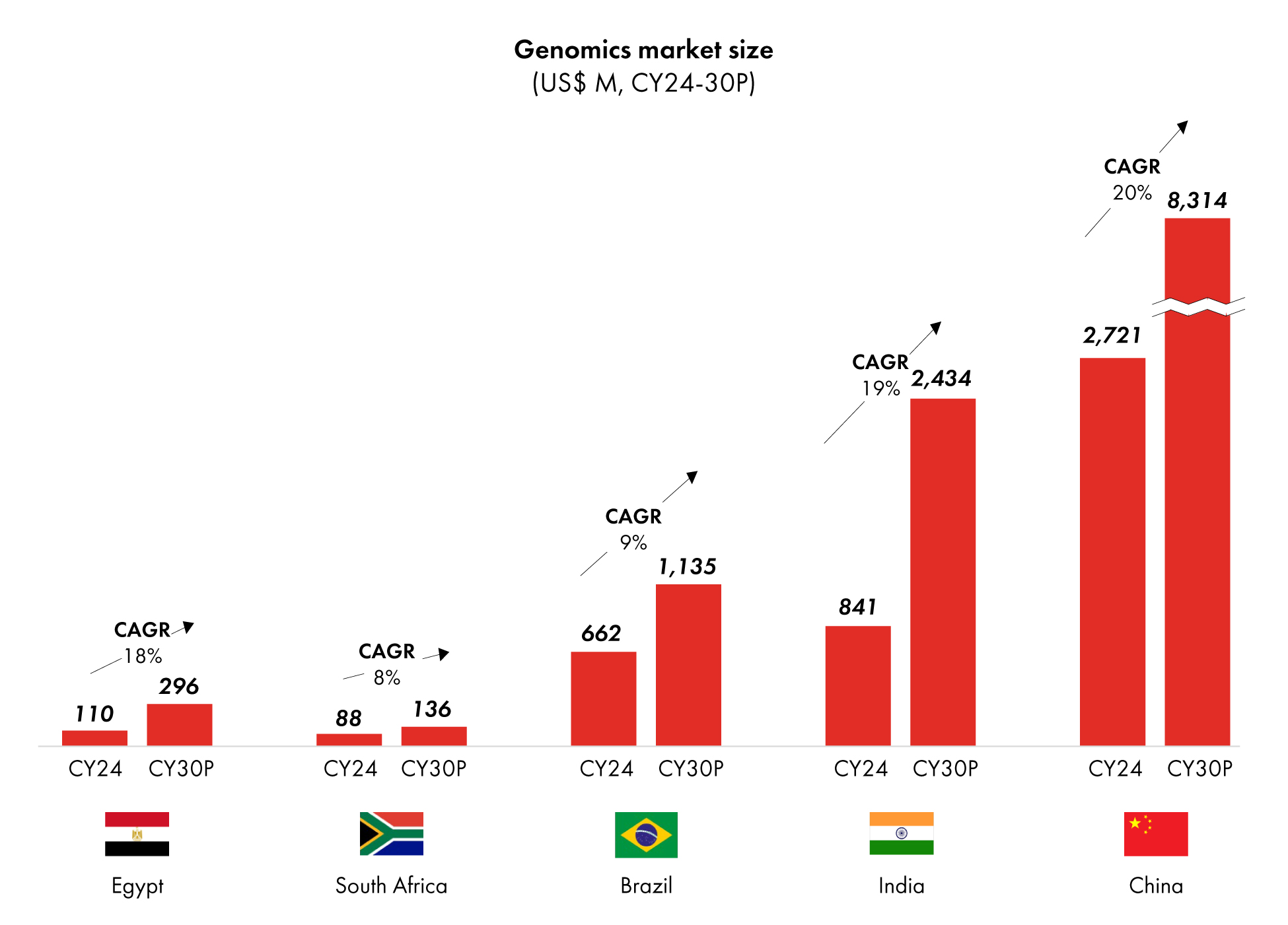 Genomics initiatives in emerging countries
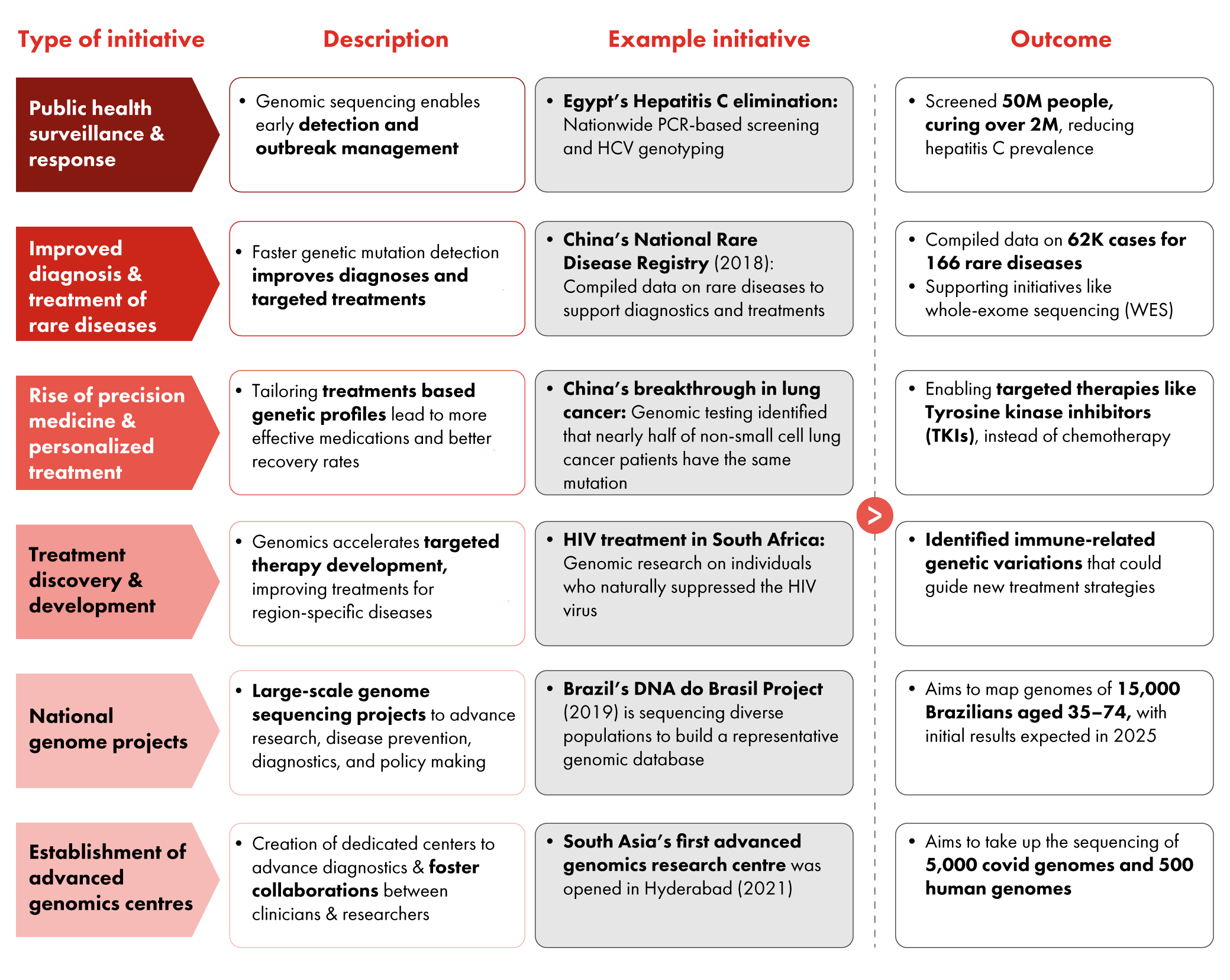
Egypt's
hepatitis C screening initiative has successfully treated millions of patients,
while South Africa pioneers genomics in infectious disease research with a
focus on HIV and tuberculosis. Brazil's Genomes Program is enhancing medical
research and guiding health policies across the nation. China is advancing
precision oncology and establishing rare disease registries, which are
improving targeted cancer treatments and accelerating diagnosis speeds. These
diverse efforts collectively demonstrate the growing impact of genomics in
tackling critical healthcare challenges in developing regions.
Exhibit 3: Genomics
initiatives of emerging countries
Challenges
The
widespread adoption of genomics remains a challenge in emerging countries due
to several factors, such as the limited infrastructure and skilled talent,
stemming from broader issues such as limited funding, inadequate training, and
constrained educational pipelines. The impact of such shortages is evident,
given in 2021, African nations sequenced only 7K COVID-19 genomes over 50
days, compared to 590K by EU countries in half that period. Similarly,
additional challenges, such as high
equipment costs, regulatory barriers, and underrepresentation of local genomic
data also hinders the adoption.
Exhibit 4: Challenges in the adoption of genomics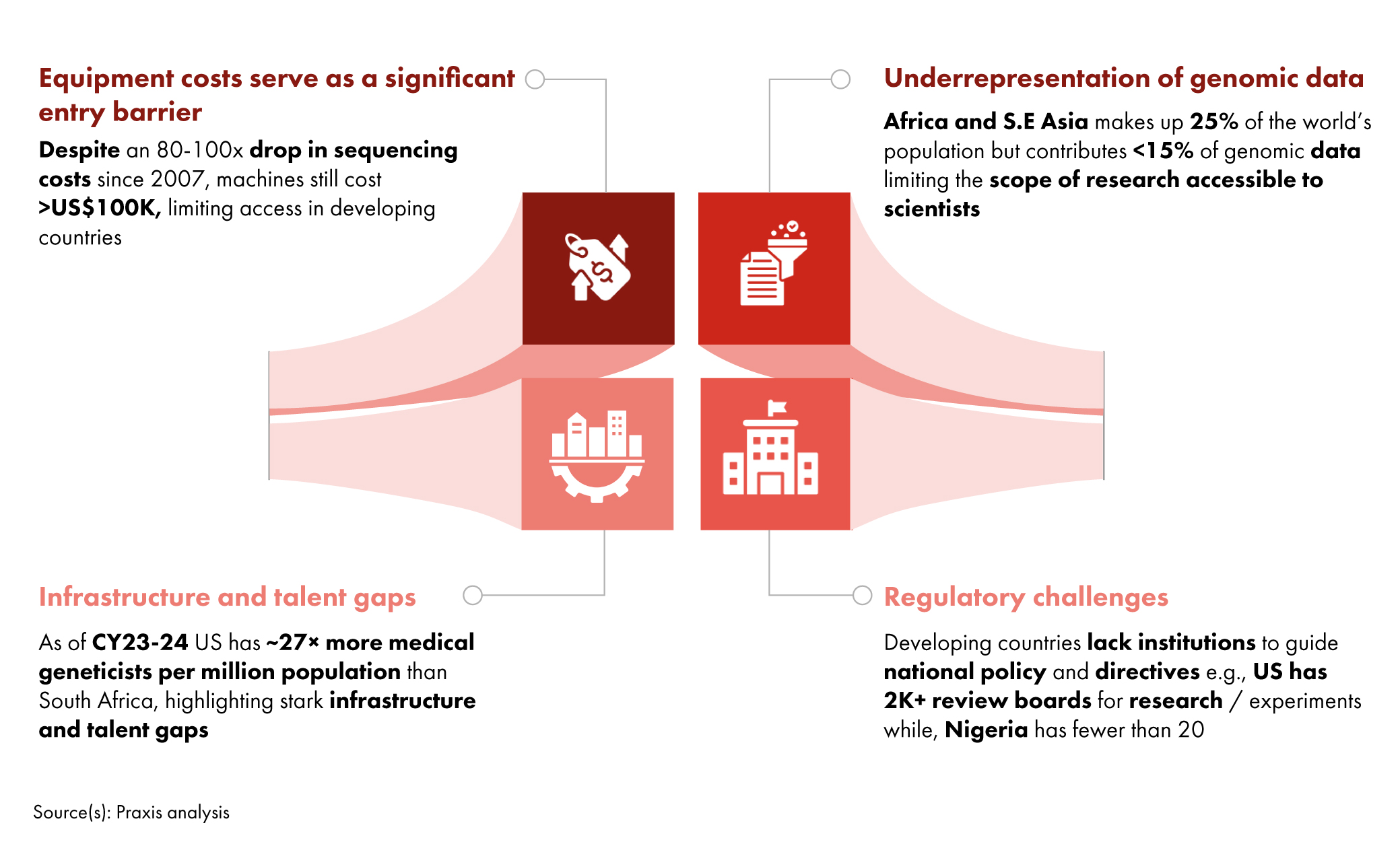
Conclusion
Genomics holds immense potential to reshape healthcare in emerging countries. These countries are actively contributing to global research and innovation. However, challenges remain, including high costs, infrastructure gaps, and the need for greater regulatory frameworks. The next phase of growth will depend on increased investments, public-private partnerships, workforce training, regulatory support, and expanded genomic data collection that represents the diverse populations of these regions.
As costs decline and accessibility improves, genomics has the potential to revolutionize healthcare, making personalized medicine a reality for millions. The coming years will be pivotal, and nations that embrace this transformation will lead the charge in reshaping global health outcomes.