


China's rising dominance in Global MedTech ecosystem
16 Apr 2025
The global MedTech landscape is undergoing a seismic shift, largely
driven by the meteoric rise of Chinese companies. For decades, the narrative
was simple: China made things cheaply. That story is now dangerously outdated.
Today, Chinese MedTech firms are not just competing; they are increasingly
setting the pace in innovation, quality, and global reach.
China’s role in international MedTech trade has
expanded significantly. In 2000, the country accounted for less than 3% of
global trade in MedTech products. By 2021, China’s share had surged to 12.4% of
global exports - amounting to nearly US$ 40B.
Key drivers of China’s MedTech rise
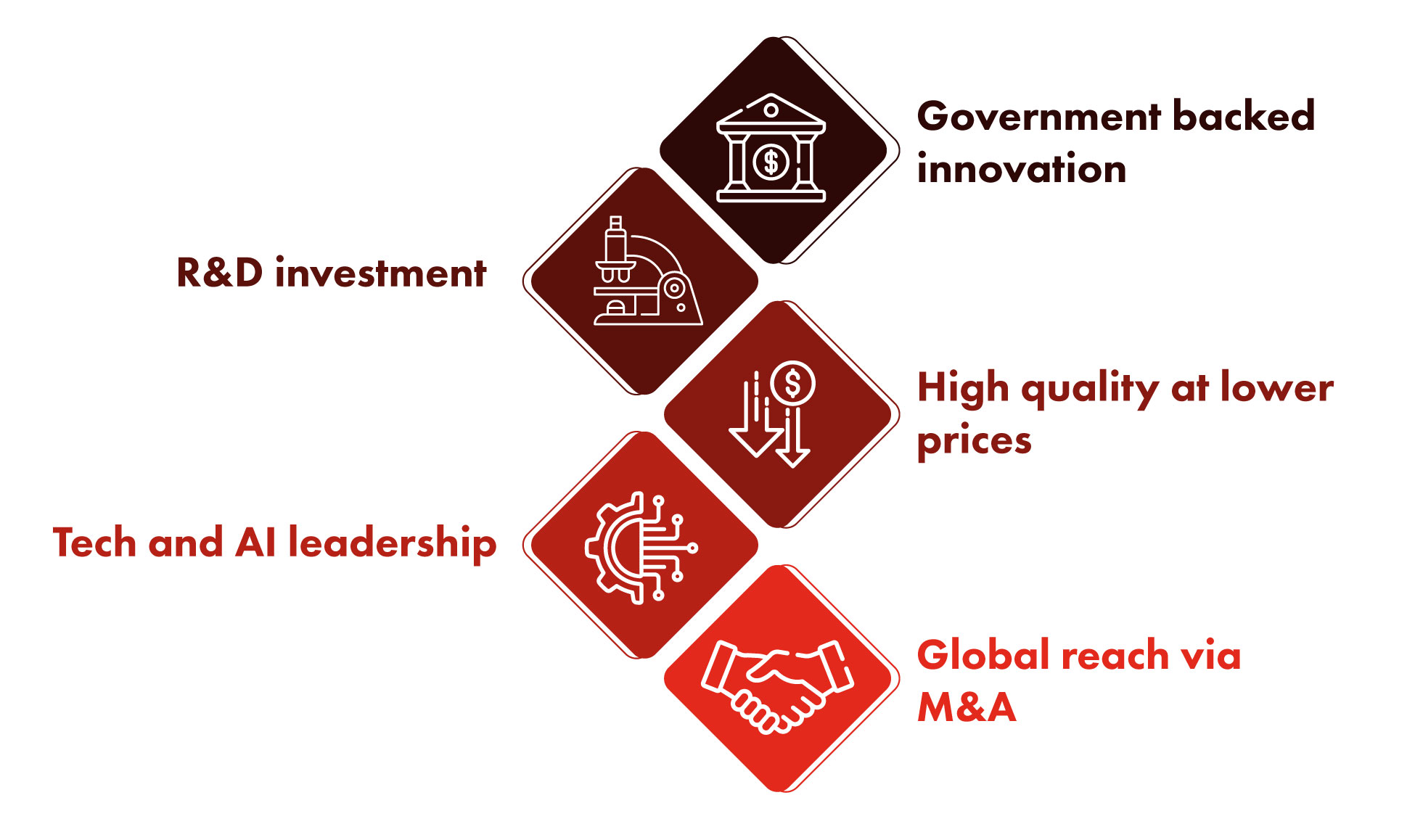
But why is this happening now, and with such force? It's not accidental. It's the result of a deliberate, multi-pronged national strategy, combining state ambition with fierce market dynamics. Let's dissect the blueprint behind China's MedTech surge.
Exhibit 1: Drivers of China's MedTech Rise
Government
role: Orchestrating the ascent
A key factor propelling China's MedTech sector is strong, directive government backing. National strategies like "Made in China 2025" explicitly prioritize MedTech, setting ambitious goals for domestic production of mid-to-high-end devices (70% by 2025, 95% by 2030).
This strategic direction is reinforced by significant financial incentives:
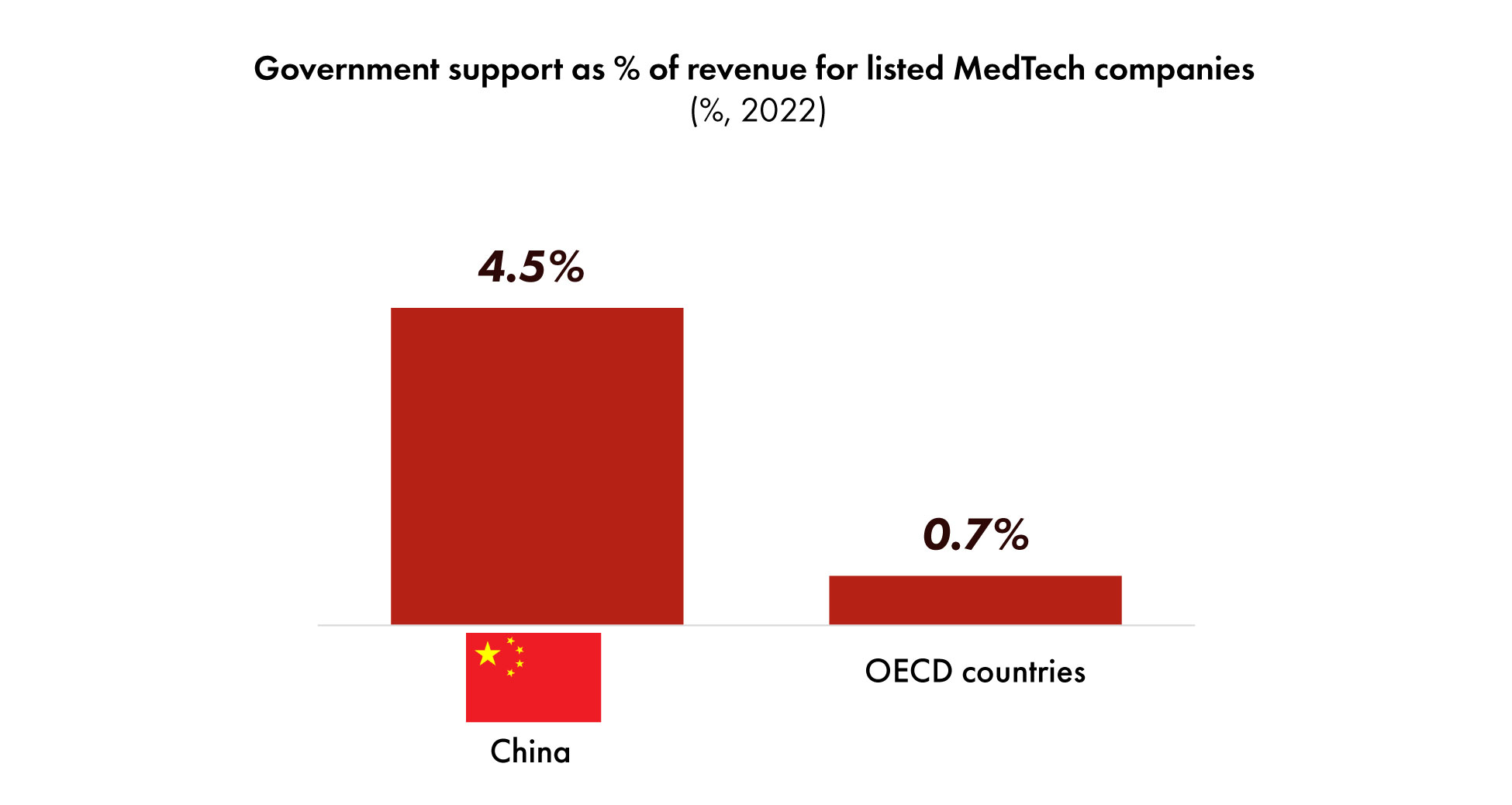
- Substantial growth in direct government support (subsidies, tax breaks, below-market borrowing) for listed MedTech firms, increasing nearly fivefold between 2017 and 2022
- Highly favorable R&D tax policies, including a 100% super tax, allowing manufacturing firms to deduct 200% of R&D costs, significantly reducing the cost of innovation. Additionally, faster VAT refunds for equipment upgrades further support innovation and growth
Accelerated
R&D and the pursuit of quality
Driven by government incentives (such as 100%
super tax) and market competition, Chinese MedTech firms are investing heavily
in R&D. Leading companies now dedicate 11-14% of their revenue to R&D,
surpassing the 6-8% average often seen among Western peers.
This
investment reflects a clear shift beyond low-cost production towards competing
on technological advancement and product quality. Initiatives like the 14th
Medical Equipment 5-Year Plan further emphasize improved performance and
quality standards through mandatory requirements and inspections.
Exhibit 3: Accelerating
innovation through R&D investment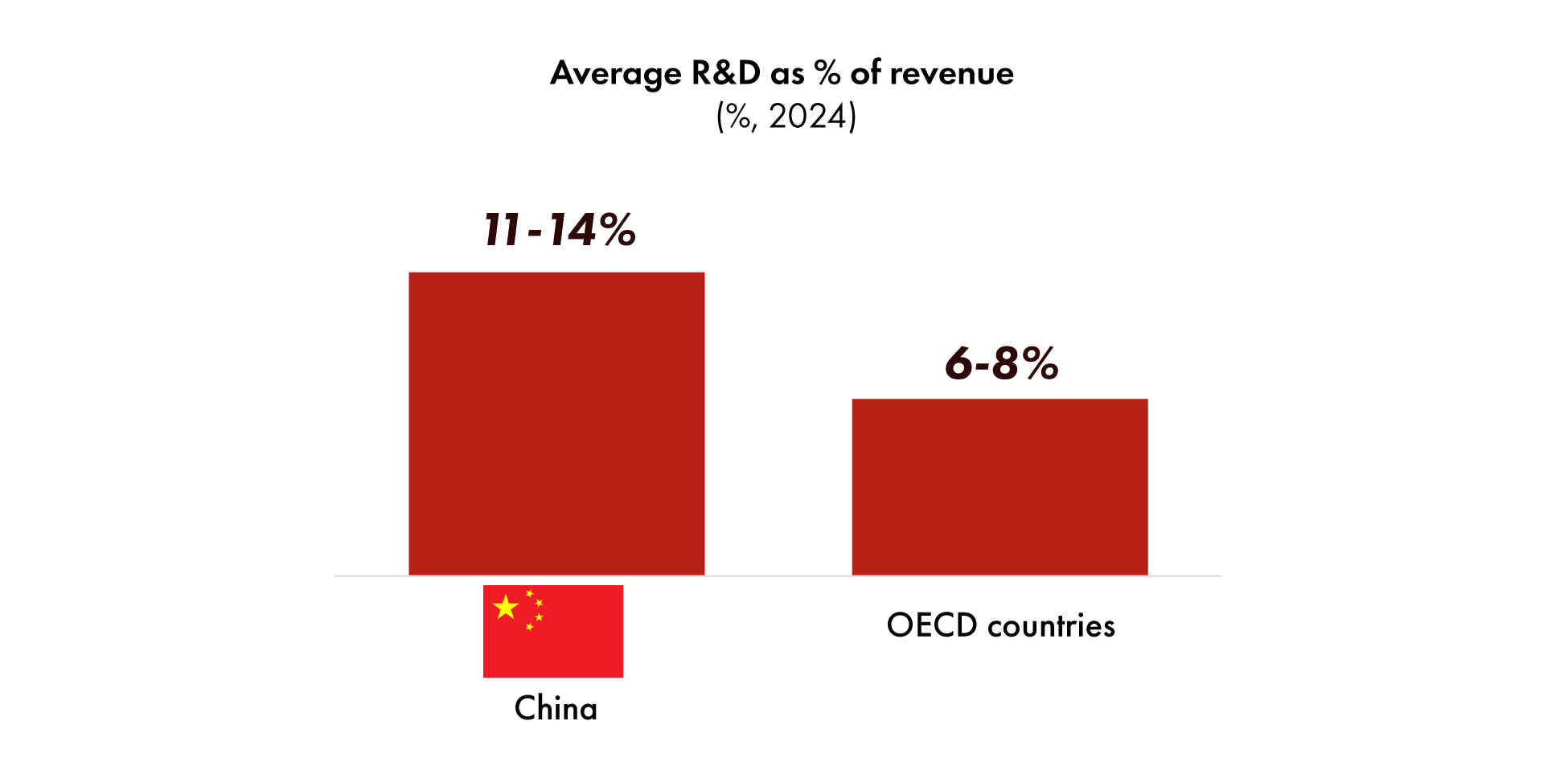
Tech
& AI Leadership
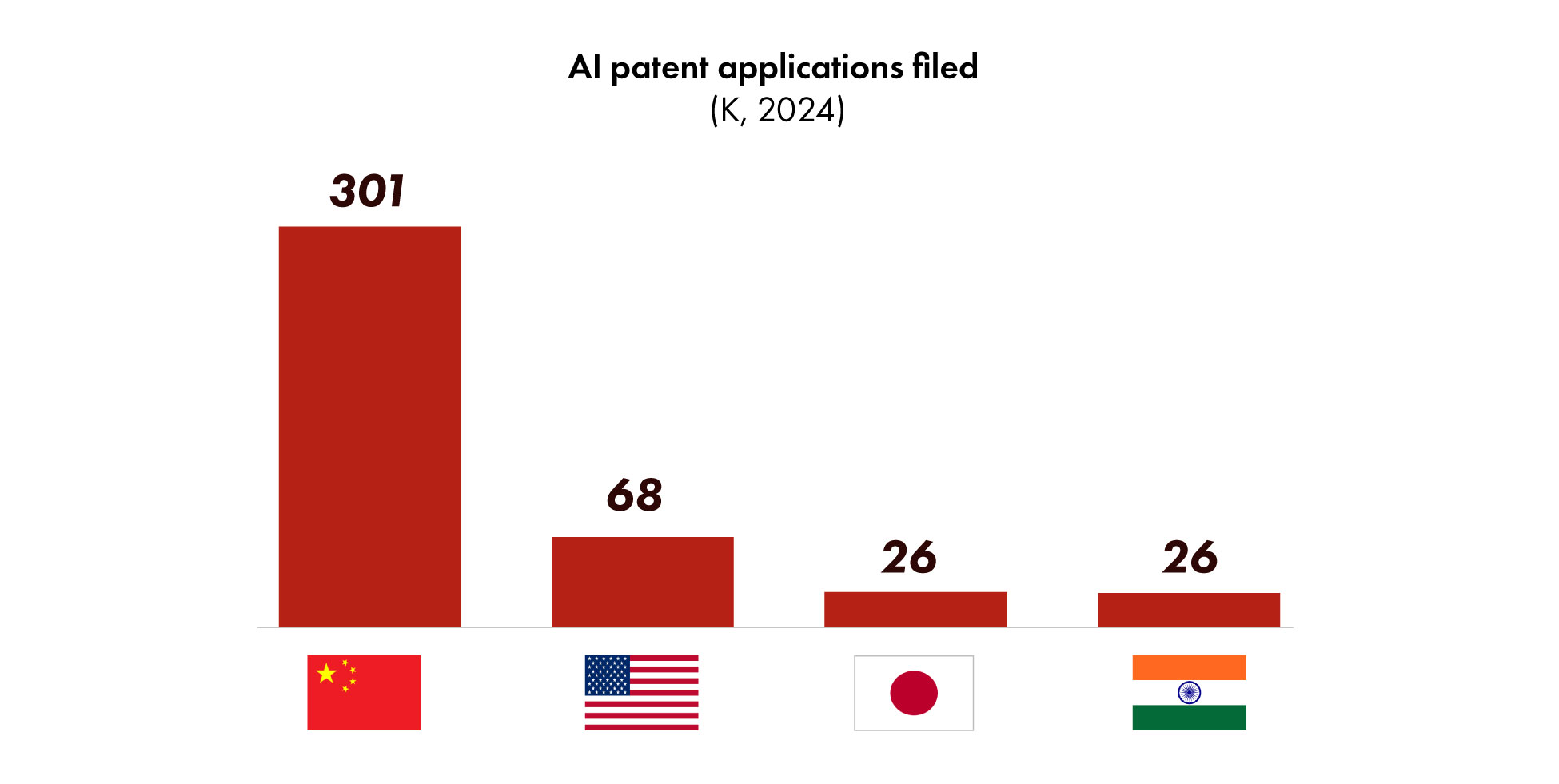
- China leads significantly in digital health patents, accounting for 40% globally (>66K patents) between 2018-22, more than double the US filings
- The talent pipeline is being actively expanded, with hundreds of universities adding dedicated AI programs
- Practical applications, such as AI-driven diagnostics and even AI-managed hospital workflows, are being rapidly deployed
Delivering
high quality at competitive costs
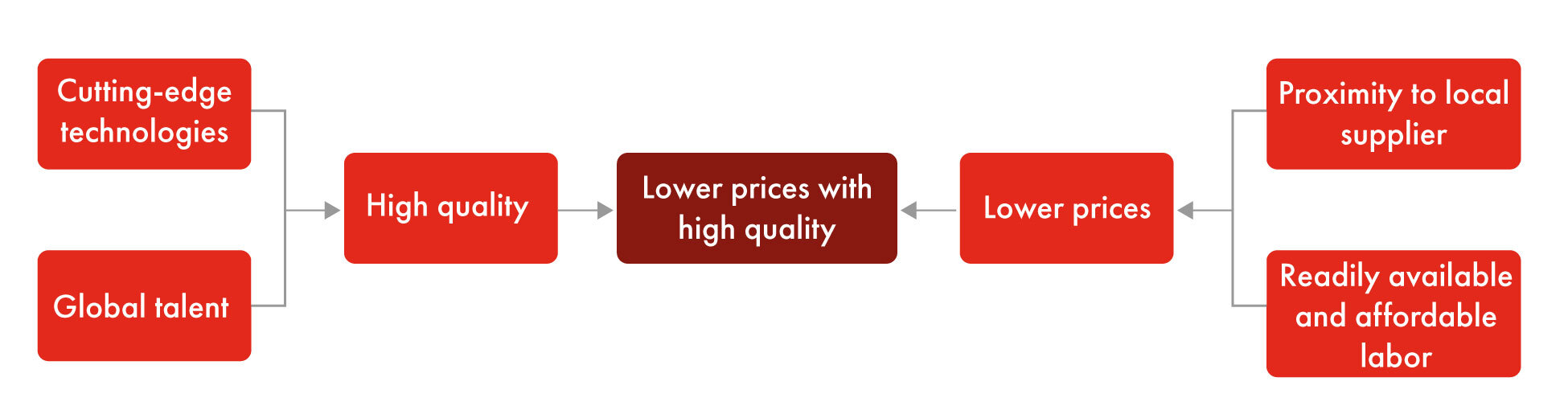
Chinese MedTech players are leveraging a powerful mix of affordable labor, proximity to suppliers, and growing technical depth to manufacture high-quality devices at significantly lower costs. Investments in cutting-edge technologies and access to global talent are helping bridge the quality gap, while local sourcing and scale efficiencies drive down prices. This combination is enabling Chinese firms to offer globally competitive products that deliver strong value across both emerging and mature markets.
Exhibit 5: High quality at lower cost driving China's strategic edge
Strategic
global expansion through M&A
- Advanced technology and broader product portfolios
- Established international market access and distribution channels
- Regulatory expertise in different regions
Exhibit 6: Accelerating global presence via strategic acquisitions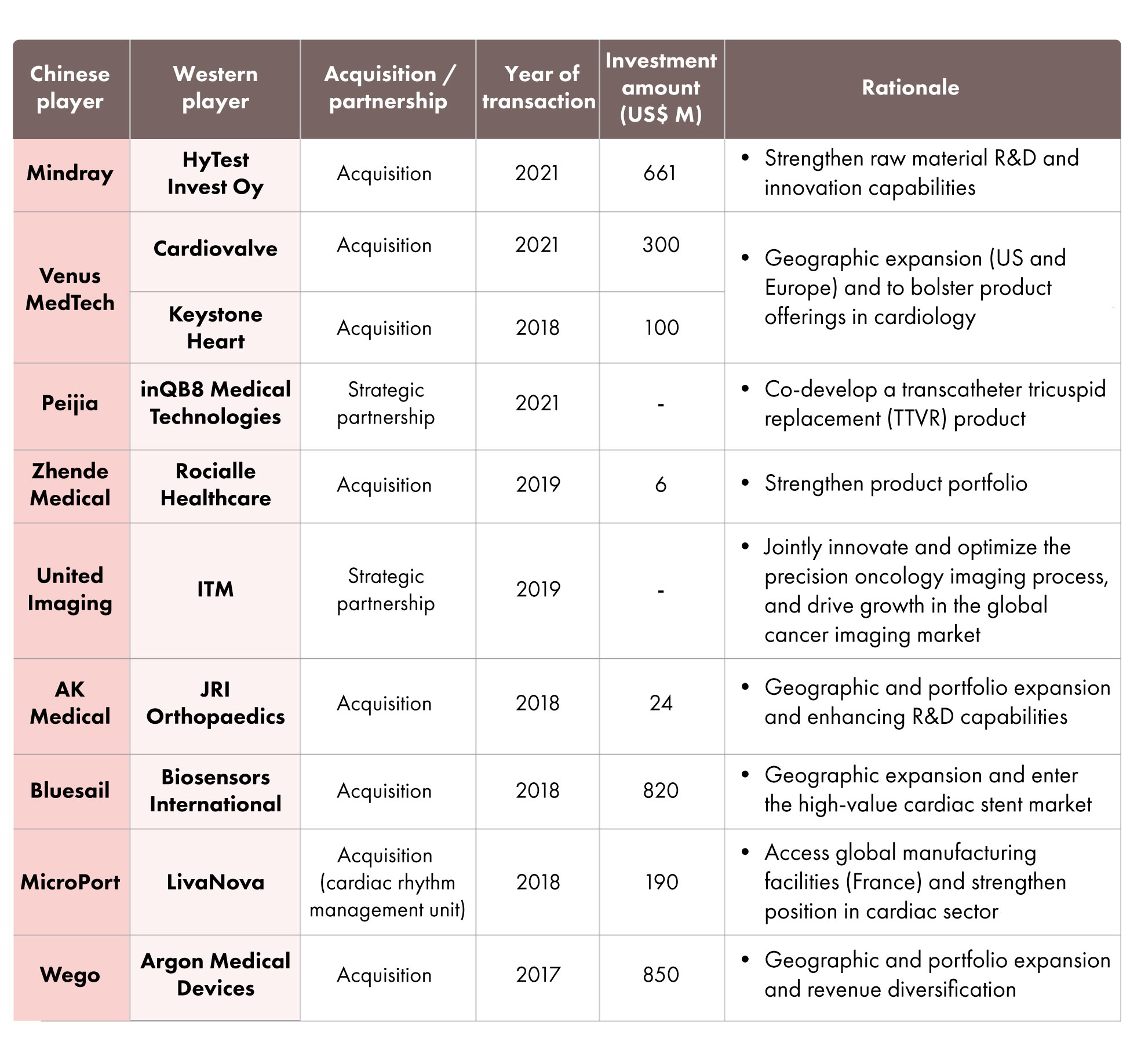
Conclusion
The rise of Chinese MedTech companies signifies a fundamental shift in the global healthcare industry. Their success stems from a powerful combination of strategic government support, aggressive R&D investment, strong technological capabilities, and calculated global expansion.
For established international firms, this necessitates strategic adaptation through partnerships, leveraging China's supply chain strengths, or further differentiating through clinical evidence. For investors, significant opportunities exist, particularly in high-growth areas where Chinese firms show leadership, like AI and digital health. Engaging proactively with this evolving ecosystem is key to thriving in the future of global healthcare innovation.